Optimizing Academic Engagement


Timeline: 3 weeks

Model: Instructional Systems Design

Responsibilities: Instructional Design

Tools: Microsoft PowerPoint
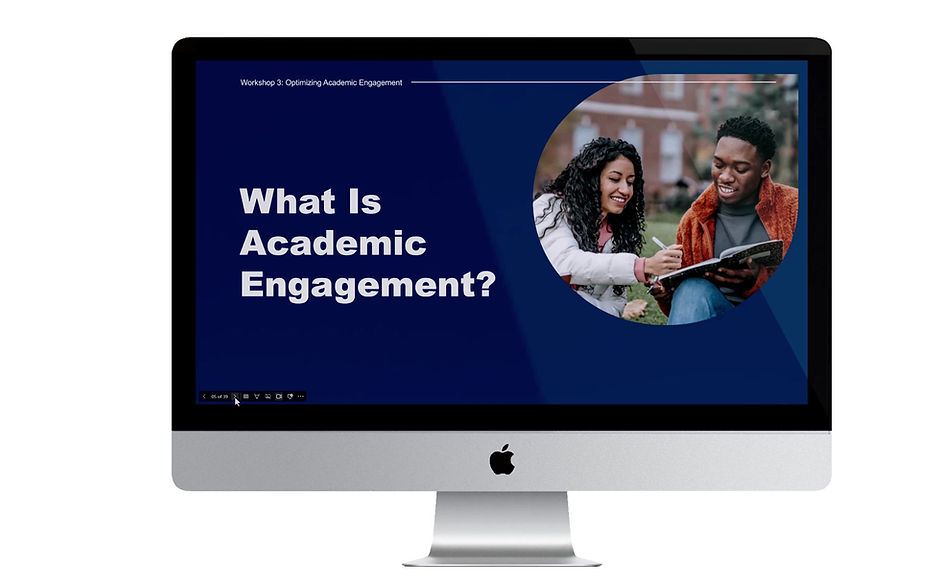
Optimizing Academic Engagement was one of a series of workshops for faculty at Notre Dame de Namur University (NDNU). The workshop focused on the driving question, "What makes students love their courses"? My approach included analyzing the learning needs of this professional development opportunity, identifying research-based strategies to maximize academic engagement, collaborating with the instructors who hosted examples of their courses, designing engagement, and conducting an informal evaluation at the end of the workshop by administering a survey.

THE CHALLENGE
With the institution transitioning from fully in-person to online synchronous and asynchronous learning, many instructors expressed concerns about maintaining course effectiveness. Ensuring student engagement during this shift has become a key focus of collaboration between instructional designers and faculty in course development. To address these concerns and support course design needs, the director of the Center for Excellence in Teaching and Learning tasked me with designing, developing, implementing, and evaluating a workshop that would allow instructors to explore strategies for optimizing student engagement in distance learning - a vital initiative during this period of change.

DESIGN & DEVELOPMENT
LEARNING OBJECTIVES
The primary goal of this workshop was to equip faculty members with research-based strategies to enhance student engagement in their courses measurably. To achieve this, the central learning objectives focused on introducing the multifaceted nature of student engagement and analyzing and evaluating strategies tailored to each type of engagement.

Workshop Learning Objectives. Screenshot.
INSTRUCTIONAL & LEARNING STRATEGIES
The workshop incorporated a mix of lecturing and interactive activities to engage participants actively. I identified key cognitive, behavioral, and emotional engagement strategies, drawing on examples from courses taught by four instructors I collaborated with during course development. These examples demonstrated practical implementations of the strategies, both within the institution and beyond, helping participants make connections and reflect on their teaching practices. More specifically, the examples showcased ways to foster constructive interactions among students and the instructor, engage learners in meaningful academic tasks that help students build understanding and transfer skills, offer effective learning strategies for acquiring and connecting new knowledge to prior learning, and build learners' positive emotions toward the instructor, the other learners, and the institution.
Close collaboration with and active participation of the four instructors ensured a cohesive presentation, providing a comprehensive overview of effective practices that support learners in achieving learning outcomes, applying knowledge and skills, and fostering positive connections.

IMPLEMENTATION & EVALUATION
The workshop was hosted on Zoom, and a recording was uploaded to our SharePoint site. This way, the participants were able to attend from their places, giving flexibility to others to watch it at their convenience. A survey with a focus on the effectiveness of this training opportunity and opportunities for self-assessment and planning their goals for engagement strategies was conducted at the end of the workshop.